

Penalty kicks in footballThis is one of the situations that has a significant impact on the outcome of a match. It’s a penalty kick taken from the 11-meter mark, usually awarded when the defending team commits a direct foul inside the penalty area. A penalty can open the scoring, change the course of the game, or decide the winner at a crucial moment.trực tiếp bóng đá Learn the details of the law, how to implement it, and the implications of this situation.
What is a penalty kick in football?
To properly understand penalties in football, fans need to grasp the concept, the location where they are taken, and the nature of this situation as defined in the rules of the game.
A penalty is a direct kick from the 11-meter mark.
The concept of penalty kicks
A penalty in football is a situation where the attacking team is awarded a direct kick from the penalty spot, 11 meters from the goal. Only the player taking the kick faces the opposing goalkeeper, while the remaining players must stand outside the penalty area as per regulations. This is one of the clearest scoring opportunities in football.
Why is it called a penalty kick?
Penalty kicks, also known as 11-meter free kicks, are awarded because the ball is placed at the penalty spot 11 meters from the goal. This distance creates a relative balance between the player taking the shot and the goalkeeper. The player taking the shot has a significant advantage because they get to shoot directly, but the goalkeeper still has a chance to save it if they correctly predict the direction of the ball and react quickly.
How is a penalty kick different from a regular free kick?
Unlike free kicks outside the penalty area, penalties are taken under more specific conditions. The player taking the penalty doesn’t face the wall; only the goalkeeper stands in front of the goal.tỷ lệ kèo trực tuyến This direct confrontation is what makes penalties a tense battle of wits between the shooter and the goalkeeper.
When does the referee award a penalty in football?
In football, a penalty is usually awarded when a defending player commits a foul that qualifies for a direct free kick inside their own penalty area.

Penalties are awarded when there is a direct foul inside the penalty area.
Fouling an attacking player
A team can be awarded a penalty if a defender fouls an opponent inside the penalty area. Common fouls include illegal tackles, pushing, pulling shirts, tripping, kicking, or other illegal obstructions. If the referee determines the foul is clear and occurs within the penalty area, the attacking team will be awarded a penalty.
Handball foul
Handball in the penalty area can also result in a penalty, depending on the specific situation. If a defender’s hand touches the ball in an unnatural position, increasing their body area or hindering a clear attacking opportunity, the referee may point to the penalty spot.XoilaclinkThese are situations that often cause controversy because they depend heavily on the referee’s judgment.
VAR assists in sensitive situations.
In modern football, VAR is often used to review controversial penalty situations. This technology helps referees review the foul, the severity of the contact, handballs, or situations where a player fell in the penalty area. However, the final decision still rests with the main referee after reviewing the footage and assessing the actual events.
How to take a penalty kick correctly according to the law.
Penalty kicks in football need to be taken in a clear sequence, from the ball placement and goalkeeper’s stance to the positions of the other players.
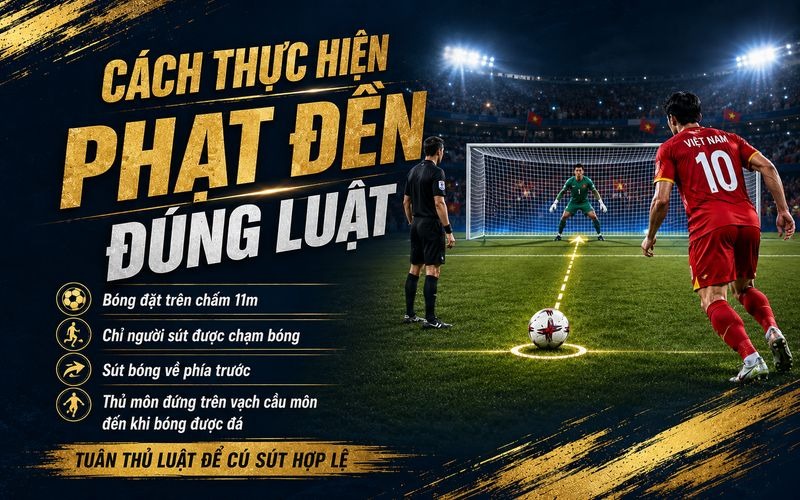
The penalty kick must be taken in full compliance with the regulations.
The ball must be placed on the penalty spot.
Before a penalty kick can be taken, the ball must be placed firmly on the 11-meter mark. The player taking the kick must be clearly identified to the referee and may only shoot after the signal is given. If the ball is not in the correct position or the player shoots before the signal, the referee may order a retake depending on the situation.
The goalkeeper must stand on the goal line.
The goalkeeper must stand on the goal line, between the goalposts, and face the player taking the free kick until the ball is kicked. The goalkeeper may move sideways on the goal line to create psychological pressure, but must not rush forward too early. If the goalkeeper violates this rule and makes a successful save, the referee may order a retake.
Other players must stand outside the penalty area.
Apart from the penalty taker and goalkeeper, all other players must stand outside the penalty area, outside the penalty arc and behind the 11-meter mark. They are only allowed to enter the area after the ball has been kicked and is in motion. If a player enters the penalty area too early, the referee will take action depending on the outcome of the shot and the offending party.
The significance of penalties in modern football.
Penalties in football are not just a legal situation; they are also moments that test a player’s character, mentality, and ability to withstand pressure.
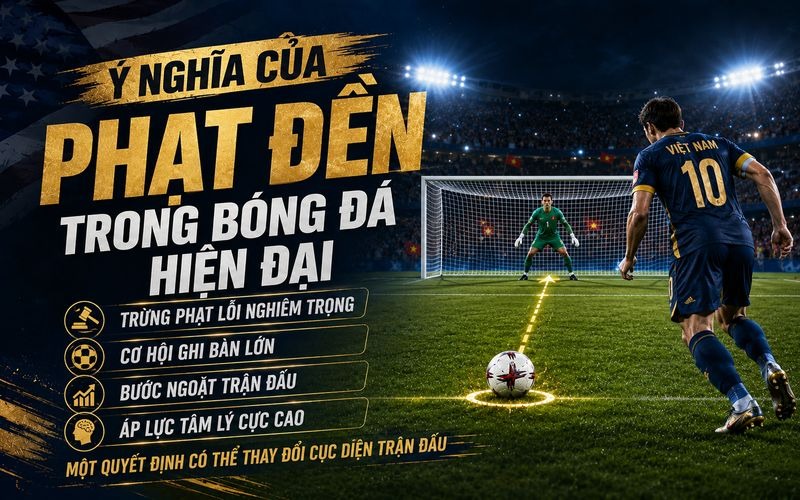
Penalties can completely change the course of a match.
The scoring opportunity is very high.
Penalties are often seen as clear-cut scoring opportunities because the player shoots from close range with no wall in the way. A technically skilled player can choose the right angle, power, and trick the goalkeeper. However, because the opportunity is so great, the pressure is also high, especially in finals or knockout matches.
A battle of wits between the player and the goalkeeper.
Each penalty kick is a tense battle of wits. The player taking the shot must decide on the direction, the run-up, and the timing of the strike. Meanwhile, the goalkeeper must observe the opponent’s habits, posture, and reactions to choose the right diving angle.XoilaclinkIt is this psychological element that makes penalty shootouts so captivating, even though they only last a few seconds.
The title can be decided.
Many big matches have been decided by penalty kicks. A successful penalty can lead a team to the championship, while a missed one can leave a lasting sense of regret. Therefore, teams often choose the player with the strongest mental fortitude to take the penalty. This shows that taking penalties requires not only skill but also immense composure.
Conclude
Penalty kicks in footballThis is a situation where the attacking team is awarded a penalty kick after the opposing team commits a direct foul inside the penalty area. It’s a clear scoring opportunity but also puts immense pressure on both the shooter and the goalkeeper.XoilaclinkUnderstanding penalty rules helps fans follow the game more accurately and fully appreciate the drama of modern football.